

Cart
0
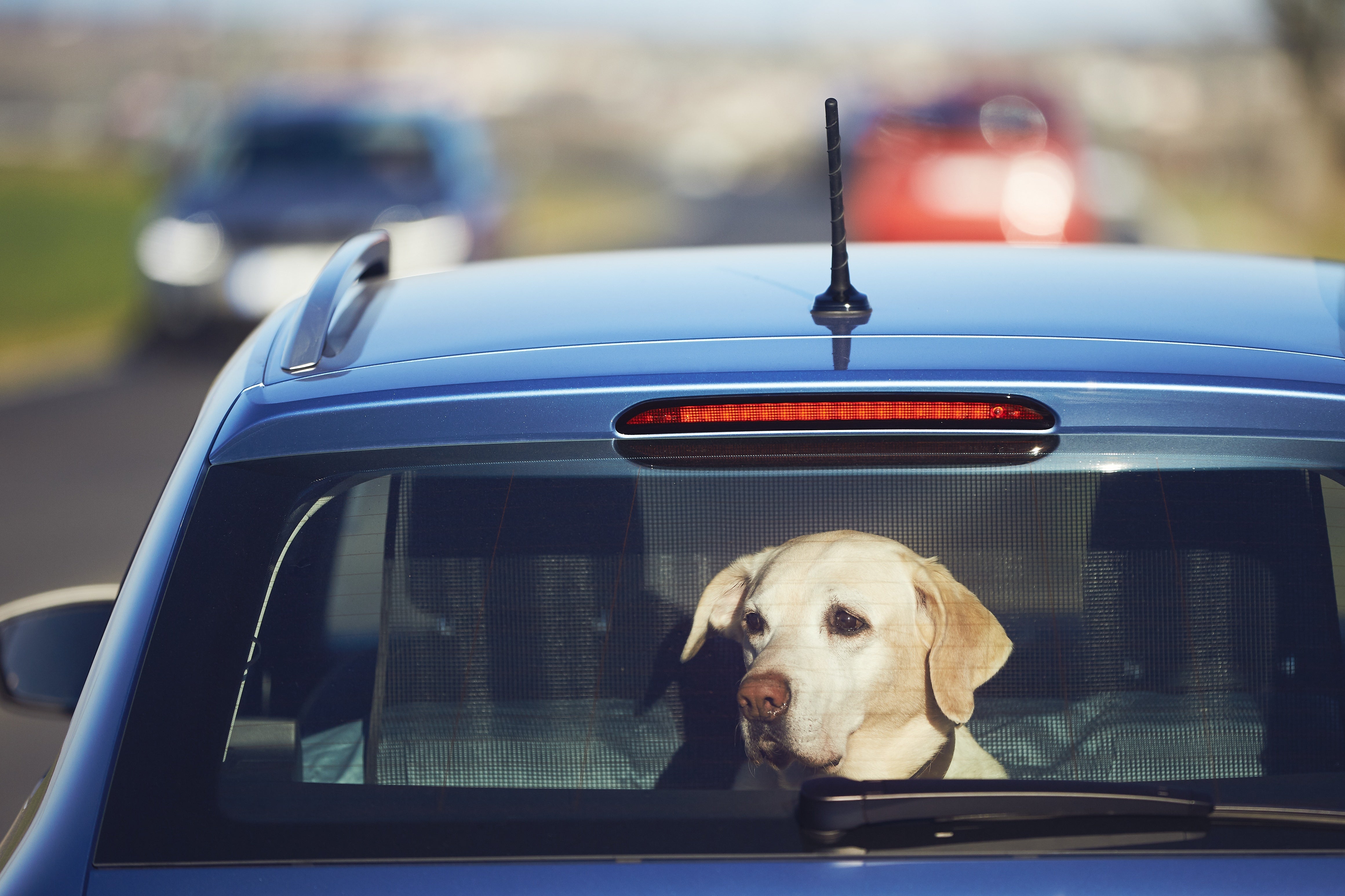
Summer is almost here, the mercury is rising, and every year it's the same scenario. Thousands of pets find themselves in danger, sometimes fatally, due to mistakes made by their owners. These are often unintentional mistakes, born from a lack of understanding of our animals' physiological realities when facing heat. Because a dog or cat does not cool down like a human. Because a car in the shade can kill in less than thirty minutes. Because heatstrokes have a 46% mortality rate in dogs not cooled down quickly.
This article does not judge anyone. It informs. And it can save a life.
What your animals feel that you don't see
Their thermoregulation is not like ours
Let's start by understanding why our pets are so vulnerable to heat. The answer is physiological, and it changes everything.
Dogs and cats do not sweat like us. Their thermoregulation system is relatively inefficient. They sweat very little, if at all, except notably through their paw pads. When thermoregulation mechanisms are saturated, the animal starts to pant with increased respiratory rate, a temperature above 40.5°C, dehydration, salivation, congested mucous membranes, followed by lethargy and loss of consciousness.
Panting is therefore the dog's only true cooling system. Concretely, this means that a dog enclosed in a confined space—a car, a cage, an unventilated apartment—exhales hot, humid air and in turn breathes increasingly hot and saturated air. It's a vicious cycle that escalates in minutes.
A dog's normal temperature is between 37.8°C and 39.2°C. Heatstroke corresponds to an excessive elevation of body temperature exceeding 40.5°C. This is a life-threatening emergency.
And this emergency can occur much faster than one might imagine.
Warning signs that too many owners ignore
The problem with heatstroke is that it escalates very quickly—and the first signs are often interpreted as normal fatigue. Here's what to watch out for:
- Intense and rapid panting, without reason of physical exertion
- Excessive salivation, foam around the mouth
- Gums abnormally red, blue, or pale
- General weakness, difficulty getting up or standing
- Vomiting, diarrhea
- Disorientation, blank stare, trembling
- Loss of consciousness, seizures — critical stage
Heatstroke is the main risk with a 46% mortality rate in dogs not cooled down quickly. Secondary complications such as kidney failure or clotting disorders can occur up to 72 hours after exposure.
In other words: even an animal that seems to have recovered should be seen by a vet. Internal damage can appear long after the episode.

The 6 most common mistakes during a heatwave
Mistake n°1 — "I left it for five minutes in the car in the shade"
This is the deadliest and most common mistake. It relies on a persistent belief: a car parked in the shade would be safe. This is false.
When the outside temperature is 21°C, the temperature inside the car can reach 32°C in just 10 minutes, 40°C in 30 minutes, and 45°C after one hour. With higher outside temperatures, everything accelerates.
In summer, the temperature inside a car can reach and exceed 40°C in less than ten minutes. During a heatwave, the mercury can fluctuate around 60°C in just fifteen minutes.
A dog or cat can die in less than 30 minutes in a car, even in mild weather (20 to 25°C) and in the shade.
The rule is absolute: never leave an animal in a parked car, even for a few minutes, even in the shade, even with a window slightly open. If you cannot take your animal with you to your destination, do not take it at all.
Legally, any owner of a domestic animal must keep their animals in tolerable climatic conditions. Any non-compliance with these provisions exposes animal owners to criminal penalties.
Mistake n°2 — Walking your dog during hot hours
Many owners maintain their walking habits in mid-summer: going out at 11 am, walking around the neighborhood at 2 pm, jogging with the dog in the early afternoon. This is a mistake that can be very costly.
The recommendations of veterinarians and health authorities are unanimous: outings should be limited to the early morning hours, ideally before 9 am, and in the evening after 8 pm.
There are two reasons for this. The first is obvious: air heat. The second is often overlooked: ground temperature. Asphalt and sidewalks store heat throughout the day. An asphalt surface can reach 60 to 70°C in full sun while the air temperature is only 35°C. For a dog whose paw pads are in direct contact with the ground, this is an immediate burn.
The back-of-the-hand test is simple: place the back of your hand on the ground for 5 seconds. If you can't hold it, your dog shouldn't either.
Mistake n°3 — Cooling your animal with very cold or ice water
Instinctively, when we see an animal in distress from the heat, we want to cool it down as quickly as possible. This is the right reflex — but with the wrong water.
Pouring ice water or very cold water on an animal with hyperthermia can cause thermal shock, peripheral vasoconstriction, and paradoxically worsen the situation. Cool your animal with cool but not ice-cold water. To regulate their temperature, dogs enjoy soaking in a fountain, but they should be wetted gradually to avoid thermal shock.
The right approach: cool water (not cold), applied gradually to the neck, armpits, groins, and paw pads — the areas of heat loss. Then immediate veterinary consultation, even if the animal seems to be doing better.
Mistake n°4 — Thinking your animal "gets used to it" because it's accustomed to the heat
Some owners living in the south of France, or who have a short-haired animal, believe their companion is more resilient. This is a misconception. Certainly, some breeds are more vulnerable than others — brachycephalic breeds (bulldogs, pugs, boxers) are particularly exposed due to their short airways. But no breed is immune to hyperthermia.
Similarly, age makes them more fragile: puppies, kittens, elderly animals, sick animals, or those on medication should be monitored with extra care.
Mistake n°5 — Not providing enough water
During a heatwave, an animal's water needs increase significantly. A water bowl filled in the morning can be empty — and hot — by midday. An animal that does not find fresh water quickly becomes dehydrated, which increases the risk of heatstroke.
Good habits: several water points in the home, changed frequently to keep them cool, water renewed before each outing, and a water bottle systematically carried during walks. For cats especially, some individuals prefer running water to stagnant water: a water fountain can make a difference.
Mistake n°6 — Leaving an animal alone in a poorly ventilated home
The apartment itself can also become an oven. A closed, unventilated home can reach dangerous temperatures during the hottest hours of the day, especially in top-floor apartments or those facing due west or south.
During a heatwave, it is advisable to have several bowls of fresh water inside the home, provide the animal with a cool room, and moisten its paw pads and fur with a damp cloth soaked in cold water.
If you must leave your animal alone during a heatwave, ensure that the coolest room is accessible to it, that shutters or blinds are closed on the sunny side, and that several water sources are available.
What the law says and what you can do if you see an animal in danger
Your rights and obligations if you are a witness
What should you do if you encounter a dog in a hot car, a cat locked in a garden without water, an animal in distress in an apartment? Many people hesitate to intervene for fear of "interfering." Yet the law is clear.
Article 20 of the law of January 6, 1999, codified under Article 214-23 of the Rural Code, allows you, when an animal enclosed in a vehicle is in danger, to have the parked vehicle opened in full sun, in the presence of a gendarme or police officer.
The procedure recommended by the Ministry of Interior is as follows:
- First, look for the owner in nearby shops
- Call the police or gendarmerie (17) or firefighters (18)
- Document the situation with photos or videos
- In case of absolute vital emergency: break the window furthest from the animal, in the presence of witnesses
- After extraction: place the animal in the shade, hydrate it gradually, and call a veterinarian
Never try ice water. Never leave without the animal having been taken care of.
Summer, the season of losses: the link between heatwave and missing animals
Heatwaves have a direct effect on animal disappearances. Distress, panic from July 14th fireworks, changes in routine due to holidays, travel to unfamiliar places — all this creates conditions conducive to runaways and losses.
August, in particular, sees the peak of reported cases with 10,145 dogs and cats reported lost, compared to only 1,328 dogs and cats found during the same period.
An animal stressed by heat is an animal that can run away, lose its olfactory bearings, and react unpredictably. Vigilance during the summer period is therefore twofold: protect your animal from the heat, and prevent it from disappearing.
And Hesteka in all this?
The heatwave is a period of maximum vulnerability for pets. It combines the risks of heatstroke, abandonment, runaways, and losses. It is precisely in this context that community tools become so valuable.
Hesteka is the free mobile application that centralizes reports of lost, found, rescued, or injured animals throughout France. Geotagged, real-time, accessible to everyone — owners, volunteers, ordinary citizens.
During a heatwave, Hesteka allows you to:
- Immediately report a lost or found animal, with photo and precise geolocation
- Receive alerts as soon as a matching animal is reported nearby
- Mobilize the local community through field missions—especially volunteers who organize neighborhood rounds to check on vulnerable animals
- Support associations that are overwhelmed in the summer, through collection points and direct donations
Because during the critical 48 hours following a loss, every report counts. Every alerted neighbor can make a difference.
Heatwaves shouldn't be a death sentence for our animals. They too often are because information doesn't circulate fast enough, far enough, well enough. That's exactly what Hesteka is here to change.
